Updated on 26 June 2026 · by Pepe, painter in Elche
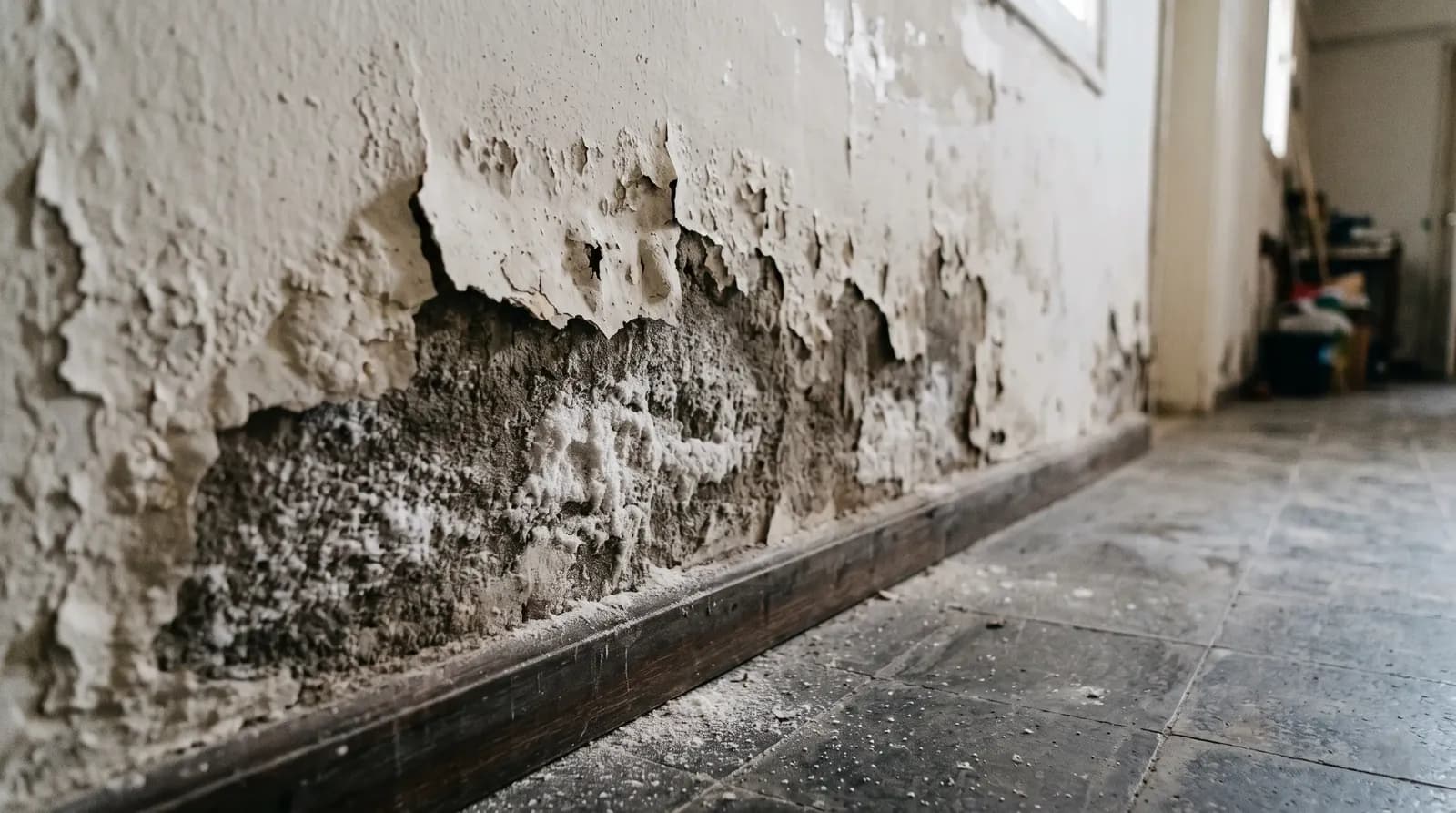
Efflorescence is those white marks, like powder or crystals, that come to the surface low down on walls and under the paint. I'm Pepe, a painter in Elche on the Costa Blanca, and round here I see it a lot: the coastal climate and ground-floor properties are the perfect breeding ground. I'll tell you what it is and how to treat it so the paint lasts.
What efflorescence is and why it appears
Efflorescence (salt deposits) are salts from the wall itself that water carries up to the surface: when the moisture evaporates, the salts stay on the wall as that white powder. In other words, it isn't a paint problem, it's a sign that there's moisture moving through the wall, nearly always rising damp (coming up from the floor).
Why it appears more in Elche and on the coast
In ground floors, garages and walls in contact with the ground, moisture rises easily and carries salts with it. And near the sea (Santa Pola, Arenales, El Altet) you add the salty air, which is even harder on façades and ground-floor walls. That's why efflorescence is a classic round here, especially in older properties and along the coast.
How to treat it before painting
Painting over efflorescence without treating it is throwing money away: the paint flakes off in scales within a few months. The right process is:
- Brush it dry and remove all the salt and loose paint (don't wet it while brushing).
- Let the area dry out well and, if there's live damp, treat the source.
- Apply an anti-salt treatment / a dedicated primer for walls with efflorescence.
- Paint with a breathable product, which lets the wall breathe and stops the salts coming back to the surface.
What I can do for you
I cut back the area, treat it and paint it with a breathable product so the finish lasts (you'll find it in my damp and anti-mould service and, if it's outside, in my façades and ground floors one). If the salt comes from serious rising damp that needs a builder's fix (chemical barrier, drainage), I'll tell you plainly: I'll leave the wall as good as it can be with paint, but I won't sell you a miracle that won't last.
Want the exact price for your project?
I will come and see it with no obligation and give you a fixed quote, free and the same day. You deal directly with me, no middlemen.
FAQ
- Can I remove the efflorescence myself with water?
- Better dry: with water you dissolve the salts and push them back into the wall, so they reappear. Brush it dry, let it dry out and treat it with an anti-salt product before painting.
- Does efflorescence disappear for good once you paint?
- With a good treatment and breathable paint it's kept well under control. But if there's significant rising damp, it's worth tackling the source as well; I'll tell you honestly what can be sorted with paint alone in your case.